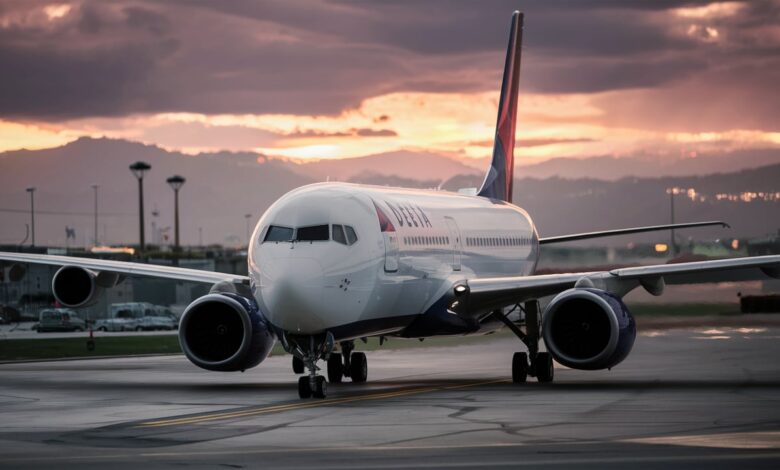
Delta Flight DL275 Diverted to LAX, operating from Detroit Metropolitan Airport (DTW) to Tokyo Haneda (HND), made headlines when it was unexpectedly diverted to Los Angeles International Airport (LAX). While diversions are not uncommon in commercial aviation, this particular incident has drawn attention because of its unusual cause, the route it took, and the resources that went into managing it. The flight was a long-haul journey aboard an Airbus A350-900, a modern wide-body aircraft, and the diversion was prompted by a critical technical alert in the engine’s anti-ice system. This article delves deeply into what happened, why LAX was chosen, how the crew and airline handled the situation, and what passengers and the broader aviation community can learn from this event.
What Triggered the DL275 Diversion: Technical Breakdown
Midway through the flight, while cruising at approximately 38,000 feet (FL380) over the northern Pacific, the cockpit crew of DL275 received warning indications related to the engine anti-ice system on one of the Rolls-Royce Trent XWB engines. The anti-ice system is vital during high-altitude flights, particularly over cold and moist air, because it prevents ice crystals from forming on critical engine inlets. Without functioning anti-ice protection, ice buildup can disrupt airflow, increase vibration, and potentially lead to engine surges or compressor stalls. In this case, sensors showed that flow rates and temperature or pressure readings were deviating from safe norms, prompting the flight crew to follow established safety protocols.
Given the seriousness of an anti-ice system malfunction, especially on a long over-water route with limited diversion options, the pilots made a conservative and safety-first decision to divert. Rather than continuing toward Tokyo, they coordinated with Delta’s operations control center, air traffic control, and maintenance teams to identify the best possible diversion airport.
Why LAX Was Chosen for the Diversion
Choosing Los Angeles International Airport (LAX) was not arbitrary. Several operational, technical, and logistical factors made LAX the optimal location for the diversion:
-
Maintenance Capabilities: LAX has full maintenance facilities that can support the Airbus A350, including specialized engineers and parts, particularly for the Rolls-Royce Trent XWB engines.
-
Delta Hub Advantages: As one of Delta’s major hubs, LAX offers strong support infrastructure for passenger re-accommodation, ground services, and quick access to alternate flights.
-
Runway Capacity: The runways at LAX are long and well-equipped to handle fully fueled, long-haul wide-body aircraft safely.
-
Emergency Services: LAX provides comprehensive emergency response services, including fire, rescue, and technical inspection teams ready to assess the aircraft upon landing.
These factors combined made LAX a strategically sound diversion airport, minimizing risk and maximizing the ability to address the technical problem effectively.
Timeline and Passenger Experience During the Diversion
After the anti-ice failure signal was detected, Delta’s operations center and the cockpit crew worked together to assess fuel reserves, potential alternate airports, and safety margins. According to reports, the decision to divert was made roughly five hours into the flight, at which point the aircraft began a descent toward LAX. The aircraft landed at LAX in the early morning hours (reports vary between 1:08 AM and 1:38 AM local time) after approximately 12 hours and 15 minutes in total flight time.
Onboard, the cabin crew communicated calmly and clearly. Passengers were informed that there was a technical issue that required precautionary action, and they were reassured that the safety and integrity of the flight were the top priorities. Once on the ground, Delta staff arranged for hotel accommodations, meal vouchers, and rebooking on subsequent flights. While the diversion disrupted many passengers’ travel plans, the airline worked to mitigate inconvenience, prioritizing safe and efficient recovery.
Post-Landing Response, Inspection & Repairs
After arriving at LAX, the A350 was met by Delta’s ground maintenance and technical teams. Engineers conducted a thorough inspection of the engine anti-ice system, including valves, sensors, and bleed-air ducts, to diagnose and correct the fault. Because the issue involved a safety-critical system, the aircraft was grounded for an extended period (reports suggest around 18 hours) until repairs and checks were completed. This comprehensive approach reaffirmed Delta’s commitment to safety over schedule.
Meanwhile, Delta’s operational teams rebooked passengers on other aircraft to Tokyo, utilizing their hub network efficiently and minimizing further disruption wherever possible. The diversion also had significant operational costs – fuel burn, inspection, repairs, and passenger care added up, reflecting the real financial impact of such unplanned events.
What This Incident Teaches About Aviation Safety
The DL275 diversion to LAX is a strong reminder of how critical safety systems, crew training, and real-time decision-making are in aviation. First, it shows the importance of anti-ice systems on long-haul flights, especially those crossing cold, remote regions. Ice formation in the wrong places can lead to serious degradation of engine performance, so these systems are non-negotiable for safe flight. Second, the crew decision-making under pressure demonstrates how aviators rely on structured protocols and constant communication with ground teams to evaluate risk and choose the safest path forward. Third, the incident underscores how airline infrastructure matters: having a major hub like LAX capable of handling wide-body A350s with complex engine types allows for safer diversions. Lastly, it highlights passenger care protocols—diversions are not just about landing safely but also about minimizing disruption and providing support.
Conclusion
The diversion of Delta Flight DL275 to LAX was a calculated and safety-driven response to a critical technical anomaly in the aircraft’s anti-ice system. Rather than risking a longer journey over remote oceanic airspace, the pilots, in coordination with Delta’s operations team, opted for a diversion to Los Angeles, a hub that could support both maintenance and passenger needs. The incident highlights the tremendous complexity behind long-haul flight safety — from systems design to real-time decision-making to ground logistics. While the unplanned landing undoubtedly caused inconvenience, it also served as a powerful demonstration of airline resilience and prioritization of passenger safety above all else.
Frequently Asked Questions (FAQ)
Q1: What caused Delta Flight DL275 to divert to LAX?
A1: The diversion was triggered by a malfunction in the engine anti-ice system on one of the aircraft’s engines, which is critical for safe operation at high altitudes.
Q2: Where was DL275 originally flying from and to?
A2: The scheduled route was from Detroit Metropolitan Airport (DTW) to Tokyo Haneda (HND).
Q3: Why didn’t the aircraft divert to a closer airport like Anchorage?
A3: Although Anchorage is geographically closer, LAX was chosen because of its superior maintenance capabilities for the A350, specialized Rolls-Royce engine support, and ground infrastructure for passenger care.
Q4: Were there any injuries or major damage when DL275 landed at LAX?
A4: No injuries were reported. The aircraft landed safely, and a thorough inspection followed.
Q5: What kind of support did Delta provide for the passengers?
A5: Delta arranged hotel stays, meal vouchers, and rebooking on alternate flights.
Q6: How long was the aircraft grounded after landing?
A6: Reports suggest that the aircraft was grounded for approximately 18 hours while maintenance and inspections were conducted.
Q7: What lessons can be learned from this diversion?
A7: Key lessons include the critical role of anti-ice systems on long-haul flights, the importance of real-time alert protocols, the need for strong airline infrastructure at diversion airports, and the value of robust passenger support during emergencies.