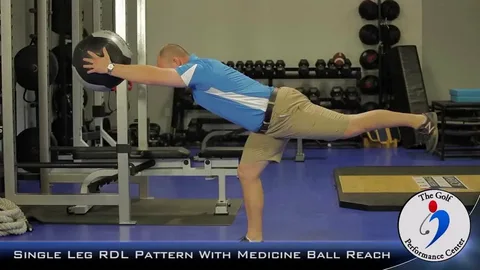
Train smarter by mastering the single leg rdl, one of the most effective unilateral lower-body exercises. Use this movement to strengthen your glutes, lengthen your hamstrings, improve balance, and correct muscular imbalances. Apply proper technique, progress methodically, and integrate the single leg rdl into your workouts to build functional strength that carries over to daily life and athletic performance.
Understand the Single Leg RDL Movement Pattern
Recognize the single leg rdl as a hip-hinge exercise, not a squat. Hinge at the hips while keeping your spine neutral and your core engaged. Balance on one leg while the opposite leg extends backward to counterbalance your torso.
Focus on pushing the hips back rather than bending excessively at the knee. Maintain tension in the hamstrings and glutes throughout the movement. Treat balance as a skill—control every inch of the descent and ascent. Train one side at a time to expose weaknesses and build symmetry.
By practicing this pattern consistently, reinforce proper hip mechanics and reduce stress on the knees and lower back.
Target the Muscles Worked by the Single Leg RDL
Activate the posterior chain by performing the single leg rdl correctly. Emphasize the following muscle groups:
- Hamstrings: Lengthen and strengthen them under load.
- Gluteus maximus: Drive hip extension and power.
- Gluteus medius and minimus: Stabilize the pelvis and improve balance.
- Erector spinae: Support spinal alignment.
- Core muscles: Brace the torso and prevent rotation.
- Ankles and feet: Improve proprioception and stability.
Train these muscles unilaterally to reduce side-to-side imbalances. Use controlled tempo to increase time under tension and maximize muscular engagement.
Execute the Single Leg RDL with Proper Form
Follow these steps precisely to perform the single leg rdl safely and effectively:
- Stand tall with your feet hip-width apart.
- Shift your weight onto one leg and slightly bend the knee.
- Brace your core and keep your chest proud.
- Hinge at the hips and extend the non-working leg straight behind you.
- Lower your torso until it is nearly parallel to the floor.
- Keep your spine neutral and hips square.
- Drive through the heel of the standing leg.
- Squeeze your glutes and return to the starting position.
Move slowly and deliberately. Maintain control at all times. Stop the descent when you feel a deep stretch in the hamstrings without losing balance or spinal alignment.
Apply the Key Benefits of the Single Leg RDL
Use the single leg rdl to achieve multiple training benefits simultaneously.
Improve Balance and Coordination
Challenge your stabilizing muscles by standing on one leg. Train your nervous system to control movement efficiently.
Correct Muscle Imbalances
Strengthen each leg independently. Identify weaknesses and prevent one side from compensating for the other.
Increase Glute and Hamstring Strength
Load the posterior chain more effectively than many bilateral exercises.
Enhance Core Stability
Resist rotation and maintain posture throughout the movement.
Reduce Injury Risk
Build resilience in the hips, knees, and ankles. Improve joint control and movement quality.
Apply these benefits to sports performance, rehabilitation programs, and everyday activities like walking, lifting, and climbing stairs.
Progress the Single Leg RDL with Variations
Advance gradually by selecting the right variation for your skill level.
Bodyweight Single Leg RDL
Begin here. Focus on balance, alignment, and control before adding resistance.
Dumbbell Single Leg RDL
Hold a dumbbell in one or both hands. Increase load slowly while maintaining perfect form.
Kettlebell Single Leg RDL
Use a kettlebell for a lower center of gravity and smoother hinge mechanics.
Barbell Single Leg RDL
Attempt this only after mastering balance and control. Use lighter loads and strict technique.
B-Stance RDL
Keep one foot lightly behind for support while emphasizing the front leg.
Progress only when you can maintain balance, control, and a neutral spine throughout every repetition.
Avoid Common Single Leg RDL Mistakes
Prevent setbacks by eliminating these frequent errors:
- Round your lower back: Keep your spine neutral at all times.
- Rotate your hips: Keep both hips facing the floor.
- Rush the movement: Slow down to maintain balance and muscle tension.
- Lock the knee: Maintain a soft bend to protect the joint.
- Add weight too soon: Prioritize technique over load.
Correct mistakes immediately to ensure safe and effective training.
Program the Single Leg RDL into Your Workout
Include the single leg rdl strategically in your routine:
- Perform 2–4 sets per leg.
- Use 6–12 controlled repetitions.
- Place it early in your workout for strength focus.
- Pair it with squats, lunges, or hip thrusts.
- Use it as an accessory or primary unilateral movement.
Train it one to two times per week depending on recovery and goals.
Build Functional Strength with the Sing-le Leg RDL
Commit to consistent practice of the sing-le leg rdl to develop balance, strength, and coordination. Treat it as a skill, not just an exercise. Control every repetition, progress gradually, and focus on quality over quantity.
By mastering the sing-le leg rdl, improve your movement efficiency, protect your joints, and build a stronger,