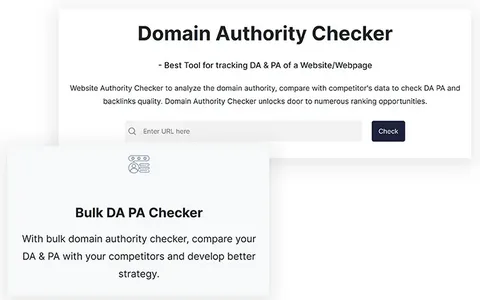
Take control of your SEO strategy by using a da and pa checker to measure website authority, compare competitors, and plan smarter optimization steps. Follow this guide to understand how to use this tool effectively and apply its insights to improve search visibility.
Understand What a DA and PA Checker Is
Start by learning what a da and pa checker does and why it matters in SEO. This tool measures two critical authority metrics:
- Domain Authority (DA) – Predict how well an entire website can rank in search engines
- Page Authority (PA) – Predict how well a single page can rank in search engines
Use these scores to estimate ranking strength, evaluate backlinks, and compare SEO competitiveness within your niche.
Remember that DA and PA scores range from 1 to 100. Higher scores usually indicate stronger authority, better backlink profiles, and higher ranking potential.
Recognize Why DA and PA Matter for SEO Strategy
Use a da and pa checker to guide SEO decisions rather than guessing. Treat these metrics as directional indicators that help you:
- Compare competitor websites
- Choose strong backlink opportunities
- Track SEO growth over time
- Identify weak pages needing optimization
Do not assume DA and PA directly affect Google rankings. Instead, use them to measure relative strength between sites competing for the same keywords. Always combine authority data with content quality, relevance, and user experience.
Use a DA and PA Checker Correctly
Follow a clear process to get accurate insights from a da and pa checker.
- Enter the correct URL
Use the root domain to check DA and a full page URL to check PA. - Analyze the authority scores
Look at DA, PA, and supporting metrics such as backlinks or spam score if available. - Compare with competitors
Check top-ranking competitors to understand authority gaps. - Track results regularly
Monitor changes monthly to see whether SEO efforts improve authority.
Avoid checking scores daily. Authority metrics update periodically and reflect long-term SEO progress, not short-term changes.
Interpret DA and PA Scores the Right Way
Interpret scores wisely to avoid wrong conclusions.
- DA/PA 1–20: New or weak sites — focus on content and backlinks
- DA/PA 21–40: Growing sites — improve consistency and link quality
- DA/PA 41–60: Strong sites — maintain SEO and scale content
- DA/PA 61+: Authority sites — protect backlinks and brand trust
Never compare authority across unrelated niches. Always benchmark your site against direct competitors only.
Apply DA and PA Data to Improve SEO
Use insights from a da and pa checker to strengthen your SEO actions.
Build High-Quality Backlinks
Earn links from relevant and authoritative websites. Focus on editorial links, guest posts, and digital PR instead of low-quality directories.
Create Valuable, Search-Focused Content
Publish content that answers real user questions. Optimize articles for search intent, not just keywords.
Improve Internal Linking
Link important pages from high-authority pages within your site. Distribute authority evenly to boost PA across pages.
Optimize On-Page SEO
Improve title tags, meta descriptions, headings, and URL structure. Ensure content readability and logical flow.
Remove Harmful Backlinks
Identify spammy or irrelevant backlinks and disavow them if necessary to protect authority.
Avoid Common Mistakes When Using a DA and PA Checker
Prevent SEO missteps by avoiding these common errors:
- Do not chase DA instead of real rankings
- Do not buy backlinks just to increase authority
- Do not compare DA scores across different industries
- Do not ignore traffic, conversions, and user engagement
Use DA and PA as supporting metrics, not final performance indicators.
Choose the Right DA and PA Checker Tool
Select a da and pa checker that fits your workflow. Look for tools that provide:
- Accurate authority metrics
- Bulk URL checking
- Spam score analysis
- Backlink insights
Free tools work well for beginners, while professionals may prefer advanced platforms for deeper analysis.
Understand the Limitations of DA and PA
Acknowledge that DA and PA are third-party metrics, not official Google signals. They are based on backlink data and machine learning models that estimate ranking potential.
Use them to support decisions, not replace comprehensive SEO audits.
Use DA and PA Checker for Competitive Advantage
Gain an edge by integrating a da and pa checker into your SEO routine. Analyze competitors, identify link gaps, and focus resources where they matter most.
Track authority growth over time, but always prioritize quality content, ethical link building, and user satisfaction.
Frequently Asked Questions
What is the purpose of a da and pa checker?
Use it to measure website and page authority and evaluate SEO strength compared to competitors.
How often should you check DA and PA?
Check monthly or quarterly to track meaningful SEO progress.
Can DA and PA guarantee rankings?
No. They predict potential but do not guarantee rankings.
What improves DA and PA the most?
High-quality backlinks, strong content, and proper internal linking.
Are free DA and PA checkers reliable?
Yes, for general analysis, but results may vary slightly between tools.
Conclusion
Use a da and pa checker to analyze authority, guide link-building strategies, and strengthen SEO planning. Apply insights thoughtfully, avoid shortcuts, and focus on sustainable growth. Combine authority metrics with real performance data to achieve long-term search success.